
We're mainly in laminating aluminum foil with various plastic films.

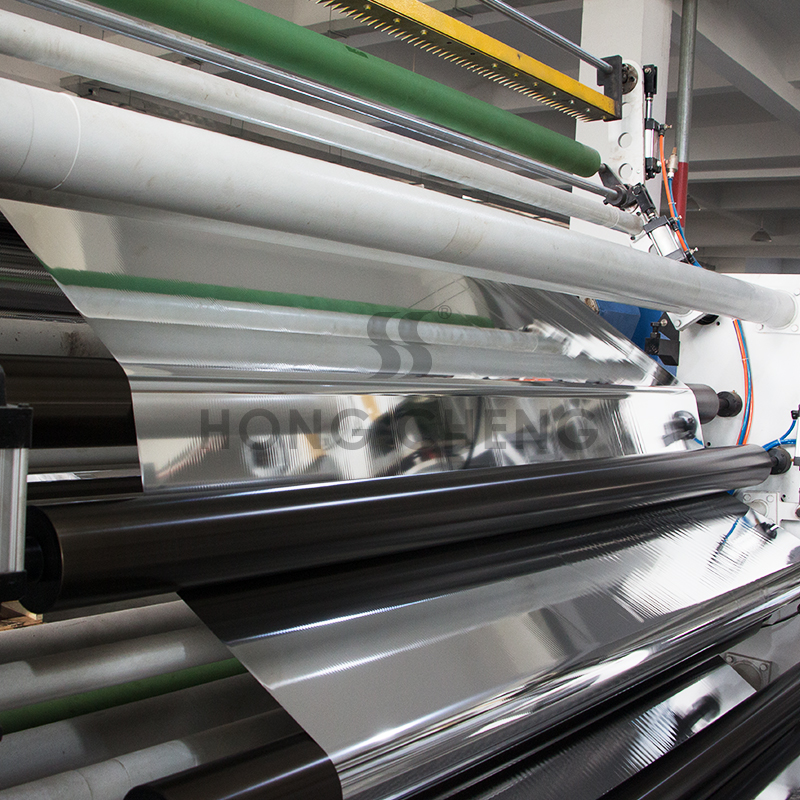
In thermal insulation projects for industrial pipelines, building HVAC systems, and energy transmission pipelines, pipeline aluminum foil plays a crucial role as a core auxiliary material. It provides excellent thermal insulation, moisture resistance, and corrosion protection, helping to reduce energy loss, extend pipeline service life, and ensure the stable operation of the entire system. However, the construction and installation quality of pipeline aluminum foil directly affects its thermal insulation effect and service life. Improper construction may lead to gaps, wrinkles, or damage to the aluminum foil, reducing its performance and even causing potential safety hazards. This article focuses on the standard construction and installation process of pipeline aluminum foil in thermal insulation projects, details the key steps, preparation work, technical points, and quality inspection requirements, provides practical guidance for engineering practitioners, and meets SEO optimization needs while adhering to relevant industry standards.
Before starting the construction and installation of pipeline aluminum foil, thorough preparation work is essential to lay a solid foundation for smooth construction and ensure installation quality. The preparation work mainly includes three aspects: material preparation, equipment preparation, and on-site preparation, each of which requires strict compliance with relevant specifications and project requirements.
In terms of material preparation, pipeline aluminum foil and supporting materials must meet the design requirements and industry standards. The pipeline aluminum foil should be selected according to the project’s thermal insulation needs, with appropriate thickness and performance. Common thickness specifications of pipeline aluminum foil for thermal insulation projects range from 0.03mm to 0.2mm, and composite aluminum foil (combined with PET, glass fiber, or other materials) is often used to enhance mechanical strength and moisture resistance. It is important to check the quality of the aluminum foil before use: the surface should be smooth, clean, and free of oxidation spots, pinholes, scratches, or oil stains, and the dimensional error between adjacent foil sheets should not exceed 1mm. In addition, supporting materials such as insulation cotton (rock wool, glass wool, or phenolic foam), adhesive, sealing agent, L-shaped corner protectors, and fixing parts (bolts with rubber pads, blind rivets) should be prepared, and all materials must be accompanied by quality certificates and inspection reports to ensure compliance with relevant standards such as GB/T 22648-2023 and GB 8175-87.
Equipment preparation involves preparing professional tools to improve construction efficiency and quality. Common tools include corrugated plate cutting machines (for accurate cutting of aluminum foil), rolling tools, measuring tools (tape measures, levels), cleaning tools, and fixing tools. It should be noted that aluminum foil cutting must use special cutting equipment, and flame cutting is strictly prohibited to avoid damaging the aluminum foil surface and affecting its performance. The equipment should be inspected and调试 before use to ensure normal operation and avoid construction delays caused by equipment failure.
On-site preparation mainly includes pipeline surface treatment and construction environment sorting. First, the surface of the pipeline to be insulated must be cleaned thoroughly, removing oil stains, rust, dust, and other contaminants, and ensuring the surface is dry and smooth. For rusty pipelines, derusting treatment should be carried out to prevent rust from affecting the adhesion between the aluminum foil and the insulation layer. Second, the construction environment should be sorted out: the construction site should be free of debris, and the temperature should be controlled between 5℃ and 35℃ to avoid construction under extreme temperature conditions, which may affect the adhesion of adhesive and sealing agent. For outdoor or humid environments, additional moisture-proof measures should be taken to ensure the construction quality of the aluminum foil insulation layer.
After completing the preparation work, the formal construction and installation of pipeline aluminum foil can be carried out, which is divided into four key steps: insulation layer laying, aluminum foil cutting, aluminum foil installation, and sealing and fixing. Each step has strict technical requirements, and any link that does not meet the specifications may affect the overall thermal insulation effect.
The first step is insulation layer laying, which is the foundation of the thermal insulation project. The insulation layer (such as rock wool, glass wool, or phenolic foam) should be closely wrapped around the pipeline surface, ensuring no gaps or loose parts. For high-temperature steam pipelines, rock wool with a thermal conductivity of no more than 0.032W/(m·K) is recommended, while glass wool is suitable for medium and low-temperature pipelines such as air conditioning chilled water pipelines. The insulation layer should be laid with overlapping joints, and the overlapping width should not be less than 50mm. For vertical pipelines, the insulation layer should be laid from bottom to top, and supporting parts should be installed every 3 meters to prevent the insulation layer from slipping off. After laying, the insulation layer should be compacted appropriately to ensure uniform thickness and good contact with the pipeline surface.
The second step is aluminum foil cutting, which requires accurate measurement and cutting to ensure the aluminum foil fits the pipeline shape and size. Before cutting, the circumference and length of the pipeline should be measured accurately, and the aluminum foil should be cut according to the measured data. The length of a single piece of aluminum foil should not exceed 1000mm; for longer pipelines, multiple pieces of aluminum foil should be used for splicing, and the splicing gap should be reserved to meet the thermal expansion needs of the pipeline. For pipe bends and pipe heads, the aluminum foil should be cut according to the shape of the insulation layer: for pipe bends with a diameter less than 133mm, no less than 5 sections of aluminum foil should be used for splicing; for diameters between 133mm and 273mm, 7 to 11 sections are required; and for diameters larger than 273mm, no less than 13 sections are needed to ensure close fitting without wrinkles. The cut aluminum foil should be neatly edged and free of burrs to avoid damage during installation.
The third step is aluminum foil installation, which is the core link affecting the thermal insulation effect. The installation should follow the principle of “close fitting, no gaps, and reasonable overlapping” to ensure the aluminum foil forms a complete protective layer. For straight pipe sections, the aluminum foil should be wrapped tightly around the insulation layer, and the circumference of the aluminum foil should be 30-50mm larger than the circumference of the insulation layer to facilitate overlapping splicing. The circumferential overlapping end of the aluminum foil should be pressed with ribs to enhance sealing performance, and the overlapping width should not be less than 50mm. For vertical pipelines, the aluminum foil should be installed from bottom to top to form a downward-sloping joint, preventing water from seeping into the insulation layer. For horizontal pipelines, the circumferential joints should follow the pipeline slope, with the overlapping mouth facing downward, and the longitudinal joints should be arranged 15-45° below the horizontal center line; if there are obstacles on the side or bottom, the longitudinal joints can be moved within 60° above the horizontal center line.
For special parts such as valves, equipment connections, and pipe heads, the aluminum foil should be cut and installed according to the actual shape, with the joints and ribs arranged in a checkerboard pattern, and a 50mm margin reserved to meet the requirements of expansion, contraction, and sealing. The aluminum foil on the pipe head should be cut into pieces according to the shape of the insulation layer, with one side pressed with ribs and the other side overlapped with a straight edge, or inserted and connected. For corrugated aluminum foil, the bottom support should be installed first, then the corrugated aluminum foil should be installed from bottom to top, and the corrugated aluminum foil and surrounding corner protectors should be fixed with bolts with rubber pads or blind rivets, ensuring the narrow waves of the corrugated aluminum foil are facing outward.
The fourth step is sealing and fixing, which is used to enhance the tightness and stability of the aluminum foil layer. After the aluminum foil is installed, the overlapping joints and gaps should be sealed with sealing agent or sealing tape to prevent air and moisture from entering the insulation layer, which would reduce the thermal insulation effect. In outdoor or humid environments, the overlapping width of the aluminum foil should not be less than 50mm, and the expansion gap should not be less than 75mm, with additional sealing measures taken at the joints. The aluminum foil should be fixed with appropriate fixing parts: for vertical pipelines and flat walls, anti-slip support parts should be installed every 3 meters; the spacing of support parts for corrugated aluminum foil should comply with design requirements. It should be noted that no fixing parts should be installed at the circumferential expansion joints of the aluminum foil and the expansion joints of equipment and rotating machinery, forming movable joints to meet the thermal expansion needs of the pipeline.
After the construction and installation of the pipeline aluminum foil are completed, quality inspection work must be carried out to ensure that all indicators meet the design requirements and industry standards. The quality inspection mainly includes four aspects: appearance inspection, dimensional inspection, tightness inspection, and performance inspection.
In terms of appearance inspection, the surface of the aluminum foil should be flat and smooth, without looseness, flanging, warping, or obvious pits; the overlapping layer should not have water reverse or gap phenomena; the longitudinal joints of the pipeline aluminum foil should be parallel to the pipeline axis, and the circumferential joints should be perpendicular to the pipeline axis, with neat and straight joints. The ellipticity (difference between the major and minor axes) of the aluminum foil sheath should not exceed 8mm, and the surface should be free of obvious scratches, pinholes, or oxidation spots.
Dimensional inspection mainly checks the overlapping width and thickness uniformity of the aluminum foil. The overlapping width of the aluminum foil for equipment and pipelines should not be less than 20mm, the expansion gap should not be less than 50mm; in outdoor or humid environments, the overlapping width should not be less than 50mm, and the expansion gap should not be less than 75mm; the overlapping width of the aluminum foil between the straight pipe section and the elbow of high-temperature pipelines with a diameter of more than 250mm should not be less than 75mm; the insertion size of the aluminum foil on the flat surface of the equipment should not be less than 30mm. The thickness of the aluminum foil should be uniform, and the allowable error of the flat aluminum foil should not exceed 2mm per meter, while the allowable error of the corrugated aluminum foil should not exceed 2.5mm per meter, which can be checked with a 1-meter-long straightedge.
Tightness inspection requires checking the sealing of the aluminum foil joints to ensure no air or moisture leakage. A simple inspection method is to use a hand to gently press the joints; there should be no looseness or gaps, and the sealing agent should be evenly applied without missing or falling off. For important projects, professional leak detection equipment can be used to detect the tightness of the aluminum foil layer to ensure its moisture-proof and thermal insulation performance.
Performance inspection mainly tests the thermal insulation effect of the aluminum foil layer. The surface temperature of the aluminum foil should be measured during operation, and the thermal loss should be calculated to ensure it meets the design requirements. For example, in the insulation of high-temperature steam pipelines, the use of aluminum foil combined with rock wool can reduce thermal loss by more than 30%, and the energy saving effect is significant. In addition, the corrosion resistance of the aluminum foil should be checked regularly to ensure it can maintain good performance in the use environment.
In the process of construction and installation, there are also some key precautions that need to be paid attention to to avoid common quality problems. First, it is strictly prohibited to step on or stack items on the installed aluminum foil to prevent damage to the aluminum foil layer and affect its performance. Second, the aluminum foil should be stored in a dry and ventilated place during transportation and storage to avoid oxidation and damage caused by moisture. Third, the construction personnel should be trained professionally to master the correct installation methods and technical points, and construction should be carried out in accordance with the construction plan and industry standards.
With the continuous development of thermal insulation engineering technology and the promotion of energy conservation and environmental protection policies, the application of pipeline aluminum foil in thermal insulation projects is becoming more and more extensive, and the requirements for construction and installation quality are also constantly improving. In recent years, prefabricated direct-buried insulation pipes have gradually become popular in thermal insulation projects; the aluminum foil layer in such pipes is bonded to the insulation layer through professional processes, which can further improve the thermal insulation effect and service life, reducing thermal loss by more than 30% compared with traditional insulation pipelines. Industry data shows that the global thermal insulation material market is growing steadily, and the demand for pipeline aluminum foil, as an important auxiliary material, is also increasing, driven by the acceleration of industrial infrastructure construction and the upgrading of building energy conservation standards.
In conclusion, the construction and installation of pipeline aluminum foil in thermal insulation projects is a systematic project that requires strict compliance with the process flow, from material preparation, equipment debugging, and on-site treatment to insulation layer laying, aluminum foil cutting, installation, sealing, and quality inspection. Each link must be carried out in accordance with relevant standards and design requirements to ensure that the aluminum foil can fully play its thermal insulation, moisture-proof, and corrosion-resistant roles. By mastering the correct construction and installation methods and paying attention to key technical points and precautions, the quality of the pipeline aluminum foil insulation layer can be effectively improved, extending the service life of the pipeline, reducing energy loss, and providing reliable guarantee for the stable operation of the entire thermal insulation system.
Whether in industrial production, building HVAC systems, or energy transmission projects, the standardized construction and installation of pipeline aluminum foil is crucial to improving the efficiency of thermal insulation projects and promoting energy conservation and environmental protection. With the continuous advancement of technology, the construction technology of pipeline aluminum foil will continue to be optimized, providing more efficient and reliable solutions for thermal insulation projects in various fields.


Hangzhou Hongcheng Technology Co., Ltd. sitemap
이 웹사이트는 귀하가 당사 웹사이트에서 최상의 경험을 할 수 있도록 쿠키를 사용합니다.






논평
(0)